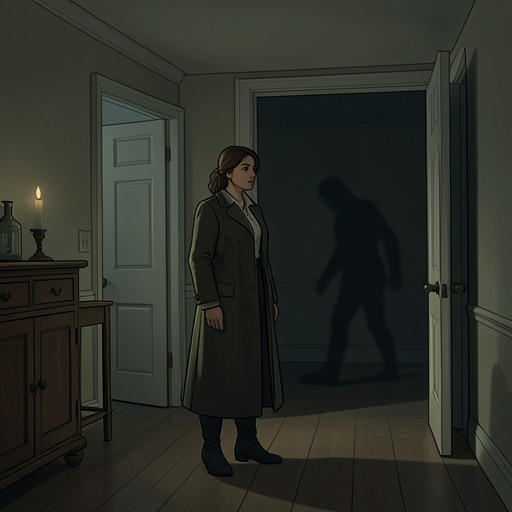
Jamie’s Attempt to Turn Himself In
Call Me YoursJamie’s Attempt to Turn Himself In is a decisive moral and narrative turn in which Jamie Cooper tries to stop the criminal course surrounding his wife, Jessica Cooper, and restore the stolen paintings to their rightful owner, Kayla Morrison. His attempt converts private discovery into a public confession, although the act is immediately strained by his physical inability to speak.
Causes and Moral Stakes
Jamie reaches the decision to call emergency services after discovering the missing paintings in his study and connecting them with Jessica Cooper’s wider conduct. He understands that Jessica had not been in the right frame of mind when she took the paintings, but he also recognizes the seriousness of what she is planning: she may be preparing to murder her employer, Kayla Morrison. The paintings therefore become more than stolen property. They are evidence of Jessica’s wrongdoing and a material link between theft, possible financial desperation, and the threatened crime against Kayla.
Jamie’s motives are divided but not confused. He wants to protect Kayla from Jessica, save Jessica from throwing away her life through a horrendous crime, and return the paintings to Kayla, whom he identifies as their rightful owner. His decision places his loyalty to his wife against his responsibility to prevent violence. Instead of concealing Jessica’s conduct or treating the paintings as a private marital problem, he chooses exposure and restitution.
The 911 Call
Jamie dials 9-1-1, but the first consequence of the call is not fluent confession. When the dispatcher’s voice asks about the emergency, his jaw suddenly refuses to open. He opens his mouth, shuts it, and tries again, turning the body itself into a record of his fear and conflict. The interruption makes the attempt precarious: Jamie has reached the point of action, yet he momentarily cannot perform the speech that action requires.
The dispatcher asks, “What is your emergency?” Jamie eventually identifies himself by name: “Hello, I'm Jamie Cooper.” The phone slips from his hand, and he catches it before it hits the floor. This small physical mishap intensifies the scene’s sense of instability while also showing that he persists rather than abandoning the call. His identity is placed directly into the emergency system before he can fully explain what he has found.
Confession and Intended Restitution
Jamie then tells the dispatcher that he has found missing paintings in his study. The statement is concrete and verifiable, but it does not yet fully state his own involvement. When the dispatcher repeats the substance of his report as a question, Jamie swallows hard and moves from discovery to confession.
He says, “I’m calling to turn myself in. I took some things which didn’t belong to me. I’d like to return them to the owner.” The wording makes the call an attempted surrender rather than a simple report. Jamie accepts personal responsibility for taking property, names the central remedy as returning it, and offers himself to the authorities. His speech therefore performs several actions at once: it reports the paintings, confesses culpability, announces his intention to surrender, and begins the process of restitution.
Consequences and Narrative Significance
The attempt changes the direction of Jamie Cooper’s involvement in the theft. Before the call, the paintings remain hidden in his study and his knowledge of Jessica’s actions is private. By dialing 9-1-1, he tries to move the evidence into public custody and prevent it from serving Jessica’s threatened murder-and-embezzlement conspiracy. The scene also places Kayla’s safety, Jessica’s future, and Jamie’s own legal exposure within the same decision.
The call is an attempted confession rather than a completed resolution. Jamie’s jaw locks, the phone nearly falls, and the available evidence ends while he is still speaking with the dispatcher. That incompleteness preserves the scene’s tension: ethical recognition has occurred, but institutional consequences have not yet been secured. Jamie knows what must be done and begins saying it aloud, yet the outcome remains vulnerable to interruption. The scene’s significance lies precisely in that threshold between concealment and accountability, where returning the paintings becomes inseparable from trying to stop a murder.